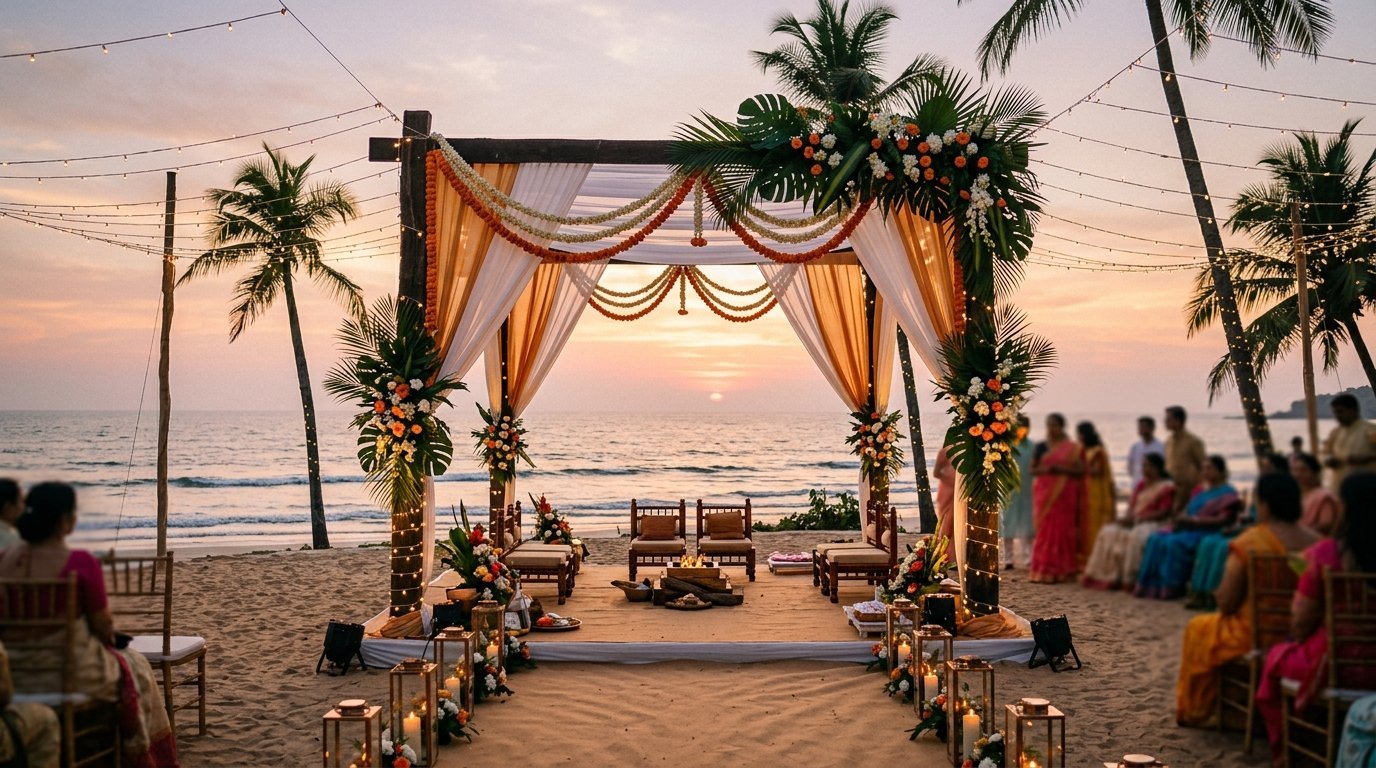
A three-day wedding is really five or six events sharing one venue, one guest list and one budget. The decor has to give each function its own mood without rebuilding the resort every night.
Most couples come to us with a folder of saved images and a date. Before we talk about flowers, we walk the property at the hour each function will happen. A lawn that looks perfect at noon can sit in harsh side light at five, and a ballroom that feels grand when empty can feel tight once a stage and a buffet go in.
Start with the venue, then the mood
On the first site visit we map three things: where guests arrive, where the light falls and where power and loading access are. Those decide more about the design than any mood board. Only after that do we sketch.
- Arrival: the first thirty metres set the tone, so the entrance gets real attention.
- Light: ceremonies are placed for the sun, receptions for the lighting rig.
- Access: a beautiful lawn with no vehicle access limits what can be built on it.
Give every function one idea
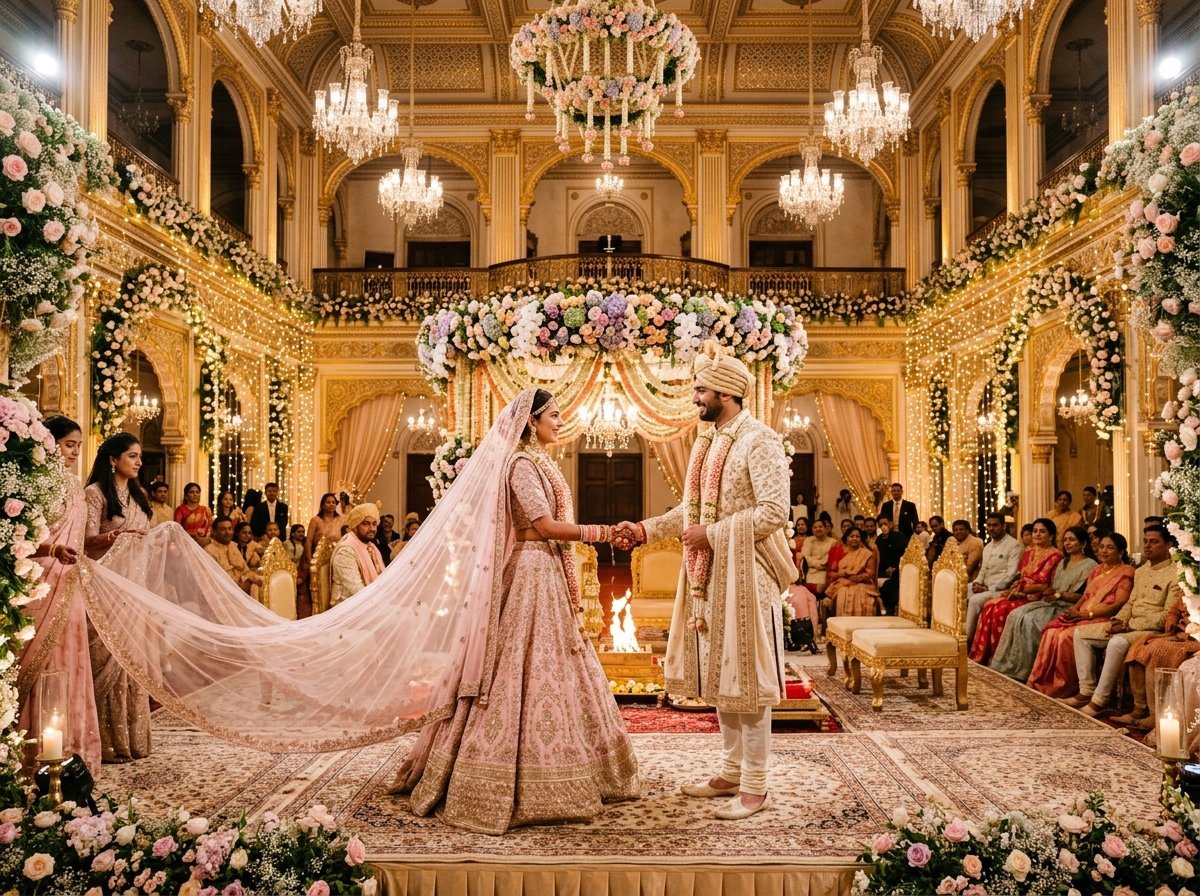
The welcome dinner, haldi, sangeet, ceremony and reception each get a single clear idea rather than a list of elements. A haldi might be marigold and cane under the palms. A sangeet might be mirror, velvet and warm amber light. When each event has one idea, guests remember them as separate evenings.
Guests rarely remember the centrepieces. They remember how the room felt when they walked in.
DC Decor design team
Where the budget does the most work
Not every corner needs the same spend. We put the budget where cameras and guests spend their time, and keep the rest simple and well lit.
- The ceremony structure and aisle.
- The reception stage and the couple's table.
- The entrance and the first photo moment.
- Lighting, which makes modest decor look considered.
Plan the turnarounds
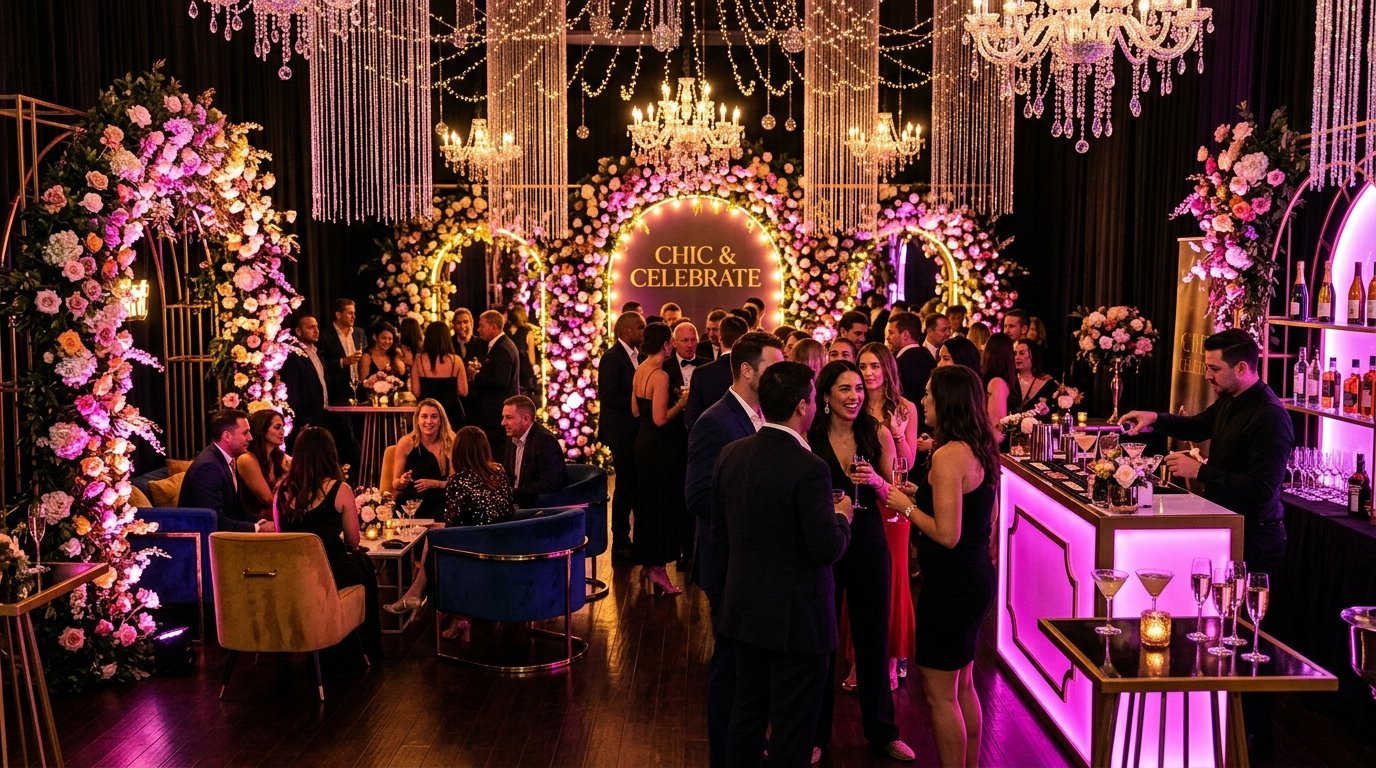
The hardest part of a multi-day wedding is the hours between events. A lawn used for a morning haldi may need to become the sangeet floor by seven. We design structures that can be redressed, with new drapes, flowers and light, instead of being torn down. It saves time and it saves money.
Leave room for the day itself
Weather shifts, flights are delayed and a grandparent decides the seating should change. A plan with a rain option, a spare hour in each setup and one calm person in charge on site will handle most of it. That is the part of the work nobody photographs, and it matters as much as the flowers.